The Fifty-Pence Canon: Digging Britain’s Lost Experimental Novelists Out of Charity Shops
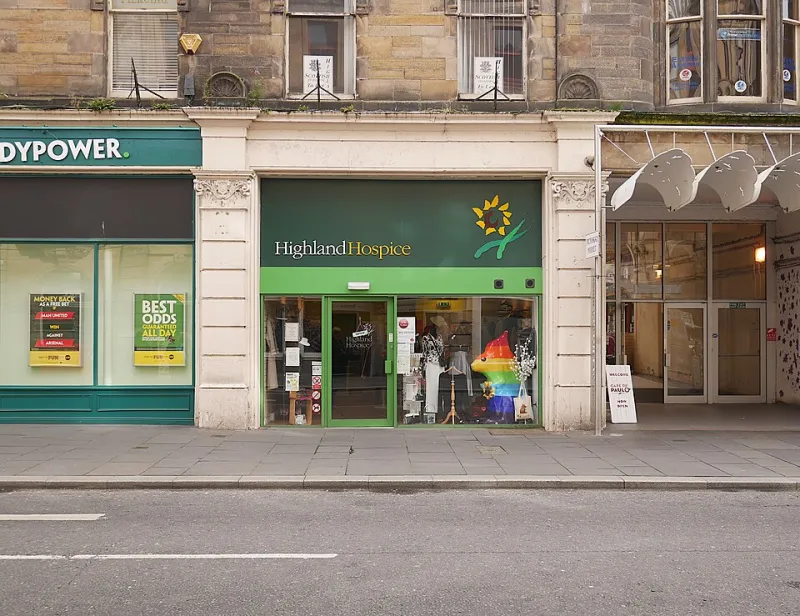
Photo: Craig Wallace , CC BY-SA 2.0, via Wikimedia Commons
Britain’s real avant-garde archive is not in a glass case at the British Library. It is a wobbly shelf near the till in a charity shop in Stockport, between a Dan Brown with a broken spine and a cookbook for people who fear vegetables. The archive costs 50p. Sometimes it is three for a pound. It smells faintly of damp and potpourri, and it is the most honest literary institution in the country.
The 50p shelf as critical apparatus
A second-hand bookshop does not care about your reading list. It does not know what TikTok likes. It has no marketing budget and no diversity statement, just a volunteer called Maureen and a cardboard box marked Misc. This is why it is so good at preserving the weird stuff. The books that fall out of fashion do not disappear; they migrate. They end up in boxes at car-boot sales, in the back rooms of Oxfam, in the plastic crates of a man called Dave who is not really a dealer, mate. The 50p shelf is not a grave. It is a distributed archive with terrible cataloguing and excellent serendipity.
At Irregular Writers we are suspicious of any canon that arrives by courier. The interesting canon arrives by accident, usually with a foxed cover and a previous owner’s name in biro. You do not find it by searching for it. You find it while looking for a jigsaw for your nan.
Field notes from the lost canon
Ann Quin is the patron saint of the charity-shop avant-garde. Berg, from 1964, is a short, slippery novel about a man returning to a seaside town with murder on his mind; it is also funny, erotic and strangely tender. Quin died in 1973, aged 37, and her work drifted out of print for years before being reissued by And Other Stories. The old Calder and Boyars editions still surface in the wild, often with a cover that looks like a European art film and a blurb that uses the word hallucinatory. Buy them. Read three pages. If you are confused, congratulations: you are doing it right.
Alan Burns is the one to look for if you like your fiction with a side order of structural rage. Europe After the Rain, Celebrations and Babel are collages of bureaucracy, violence and repetition — novels that treat the British state as a malfunctioning machine and the novel as a place to put the shrapnel. Burns was admired by other writers and ignored by the market. His books are not difficult in the way of a locked puzzle; they are difficult in the way of a loud argument in a corridor. That is a useful difficulty.
Christine Brooke-Rose is the patron saint of the second-hand paperback that should probably be on a university syllabus but is currently priced at 50p because it has a cracked spine. Between, Thru and Amalgamemnon move between languages, genders and grammatical persons. She treated the novel as a laboratory, not a sitting room. Her work was often treated as a special-interest seminar, which is a polite way of saying that the literary establishment did not know where to put it. Put it in your tote bag instead.
Jeff Nuttall is the wild card. Bomb Culture, his 1968 account of countercultural Britain, is the famous one, but his fiction is just as grubby and alive. Nuttall was a poet, painter and performance provocateur; his novels are filthy, funny and anarchic in a way that makes most contemporary transgressive fiction look like a branded content campaign. If you find a Nuttall paperback with a cover that looks like it was designed by someone having a nervous breakdown in a print shop, do not hesitate.
And then there is B.S. Johnson, the exception that proves the rule. The Unfortunates, a novel in a box whose chapters can be read in any order except the first and last; Albert Angelo, with holes cut in the pages; Christie Malry’s Own Double-Entry, which is as funny as it is furious. Johnson has been revived more often than most, partly because his formal tricks are easy to explain and partly because he is the kind of experimental writer the market can just about sell: dead, male, quotable, conveniently framed as a tragic genius. The others deserve the same treatment.
Why they fell off the shelf
Some of it is simply fashion. The British novel after the 1970s became increasingly prize-shaped: legible, well-behaved, good for a reading group. The end of the Net Book Agreement in 1995 helped supermarkets and chain bookshops squeeze the midlist. Small presses closed. Libraries culled. Review pages shrank. Experimental women writers were often filed under difficult while their male peers were filed under genius. And death is a terrible career strategy: Quin, Johnson and Nuttall all left behind work without a living author to hustle it.
None of this means the books are bad. It means they were badly served by a market that confuses permanence with profitability. The charity shop is what happens when the market’s filing system collapses. It is messy, unfair and full of surprises. It is also, for a reader, a kind of freedom.
How to read the shelf like an archive
Look for publishers first: Calder and Boyars, John Calder, Marion Boyars, Peter Owen, Alison and Busby, Quartet, Pluto Press, The Women’s Press, Virago. Look for covers that seem to have been designed for a film festival in 1972. Look for blurbs containing the words collage, linguistic, hallucinatory, disturbing or a major new talent. Look for the phrase A Novel on the cover, especially when the novel sounds like it might be an essay about the weather. Look for author photos in which the writer looks disappointed in you personally.
Do not haggle in charity shops. The 50p is the point. Buy two, leave one. Read the first page standing up. If it makes you feel slightly unwell in an interesting way, take it home. If it makes you feel nothing, put it back in the world for someone else.
The case for mess
Second-hand bookshops are the real avant-garde archive because they are accidental. They preserve what the algorithm does not. In 2026, when every online recommendation is a smooth product designed to reassure you, the 50p shelf is a small, stubborn democracy of taste. It is where the leftover, the difficult, the out-of-fashion and the plain strange wait for a reader with a spare pound and a low boredom threshold.
So next time you are in a charity shop, ignore the celebrity memoir with the cracked spine. Ignore the diet book. Ignore the thriller with the embossed title. Go to the shelf where the paperbacks look slightly embarrassed to be there. Buy the weird one. Read it badly. Argue with it. Put it back when you are done. Literary mischief begins with a cheap paperback and a willingness to be confused.