The Tannoy Will See You Now: Seven Lessons in Awkward Fiction from the Self-Checkout Till
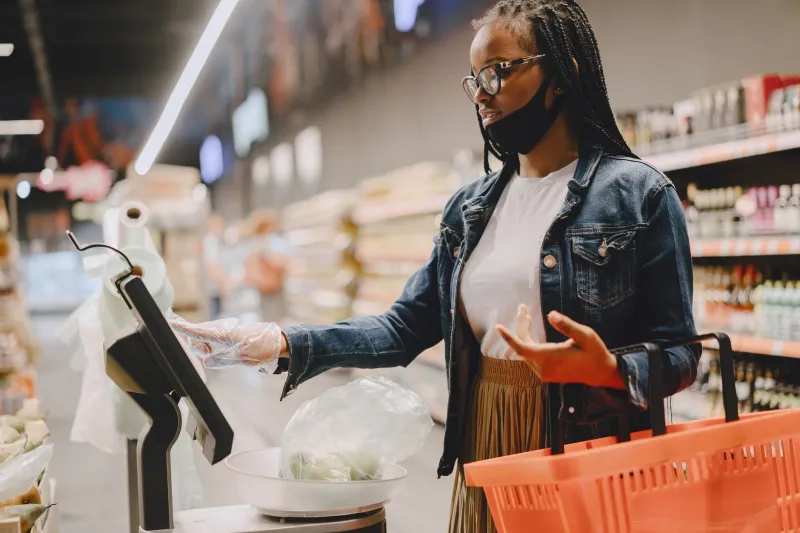
There is a particular silence that follows the phrase 'unexpected item in the bagging area'. It is not quite silence. It is the sound of a machine deciding you are a problem. Somewhere between the beep and the sigh, a small drama begins: a human being addressed as 'customer', a robotic voice pretending to be helpful, and a bag of onions refusing to cooperate. Writers spend years trying to generate that kind of tension on purpose. The supermarket has it down as a turnkey service.
This is not an argument for putting self-checkouts in novels, although I would read that novel. It is an argument for stealing their grammar. The till is a constraint machine: it interrupts, repeats, accuses, apologises without meaning it, and forces you to perform your innocence in public. That is a craft model. Awkward fiction, properly understood, is not sloppy fiction. It is fiction that refuses to smooth the reader's path for good reasons. The self-checkout is awkward by design. We can be awkward by design too.
The Till Has Opinions
Listen to the way it talks. Not 'Would you like to scan an item?' but 'Please scan your first item.' Not 'Everything all right?' but 'Please place the item in the bagging area.' The imperative is dressed as courtesy. The customer is addressed, but not consulted. This is a useful lesson in dialogue: the most unsettling speech often sounds polite. A character who says 'please' can still be a tyrant. A machine that thanks you can still be threatening.
Try this. Transcribe five prompts from a self-checkout, then remove every warm word. Or keep the warmth and remove every verb that implies choice. What remains is a voice with a plan. Put that voice into a short story as a landlord, a HR manager, a chatbot therapist, a parent. No need to explain the resemblance. The reader will feel the chill.
Error Messages Are Narrative Beats
In fiction, an error message is not an interruption. It is a beat. The first 'unexpected item' is a complication. The second is escalation. The third is comedy, or menace, depending on the lighting. The machine does not develop as a character, but its repetition develops the scene. This is how rhythm works in awkward fiction: say the same thing again, but make the room hotter.
A prompt such as 'Please wait for assistance' is a whole paragraph of implied power. Who is coming? When? Why does the machine know something you do not? The sentence is short, flat and final. It has the confidence of bureaucracy. Use it as a model for lines that close a door without raising their voice.
The Voice Is an Unreliable Narrator
The self-checkout is a magnificent unreliable narrator because it is so certain and so wrong. It says the item is unexpected. You know the item is expected. It says assistance is on its way. You can see the assistant is on their break, or helping someone else, or has quietly evaporated. The gap between official language and observable reality is the engine of the scene. That gap is also the engine of a great deal of experimental fiction.
Write a page from the machine's point of view. It believes it is being helpful. It believes the customer is erratic, possibly hostile, definitely inefficient. It records everything. It has no interior life, but it has a policy. The comedy and the unease come from the mismatch. This is also a political lesson. Automated voices often describe a world that is not the one we are standing in. Awkward fiction can hold both versions up to the light and let the reader notice the gap.
Seven Stations of a Failed Transaction
You can structure a story around the seven stages of a supermarket transaction gone wrong. Not necessarily a supermarket story. Any scene where a person tries to comply with a system that keeps moving the goalposts.
- The invitation. 'Please scan your first item.' False cheer. The beginning of a contract that is not really a contract.
- The compliance. 'Place the item in the bagging area.' The character does as instructed. Something small goes wrong.
- The suspicion. 'Unexpected item in the bagging area.' The system names the character as the problem.
- The denial. 'Please wait for assistance.' Time stretches. Other customers queue. Shame arrives.
- The false reassurance. 'Assistance is on its way.' It is not, or it is, but not in the way anyone wanted.
- The loop. 'Please rescan the item.' The character repeats an action that has already failed. Repetition becomes plot.
- The exit. 'Thank you for shopping with us.' The transaction ends without resolution. The character leaves carrying more than they came in with.
Map those beats onto a job interview, a hospital appointment, a family funeral, a date. The structure will hold. The awkwardness will transfer.
The Clubcard Confessional
Here is an exercise for a wet Tuesday. Write a 300-word story in which every line of spoken dialogue is a self-checkout prompt. No other speech is allowed. Human characters may reply only through action: a hand hovering, a receipt crumpled, a stare held too long. The result will be strange, clipped and surprisingly emotional. Machines are good at saying things people cannot.
Or make a found poem from a receipt. Keep the item names, the prices, the loyalty points, the VAT. Cross out the arithmetic. Read what is left aloud. You will hear a small, sad, funny song about appetite and bureaucracy. This is not a gimmick if you mean it. It is literary archaeology with a barcode.
The Ethics of Friction
In 2026, the corporate dream is frictionless. One tap, one scan, one less human being on the payroll. Self-checkouts are sold as speed, but they also redistribute labour onto the customer and turn every shopper into a suspect. The machine watches. The machine weighs. The machine asks you to prove you are not a thief by putting a banana in the right place. Awkward fiction has something to say here, not by lecturing, but by refusing the smooth surface.
Friction must be purposeful. Making readers wait for no reason is not experimental; it is rude. But making them wait inside a system that will not explain itself is a political act as well as a literary one. The awkward sentence, the repeated phrase, the polite threat, the unresolved scene: these are ways of saying that the world is not seamless and neither is our experience of it.
Please Retain Your Receipt
So next time the till tells you there is an unexpected item in the bagging area, do not simply swear at it. Take notes. Write down the prompt. Ask who benefits from the machine's version of events. Then go home and make a story that is deliberately, beautifully awkward: a story that pauses where it should glide, repeats where it should resolve, and lets the reader feel the weight of being watched.
If the machine asks whether you want a bag, say yes. You will need somewhere to put the receipts.