The A5 Conspiracy: Britain’s Pamphlet Presses Are Hiding the Future in Plain Staple
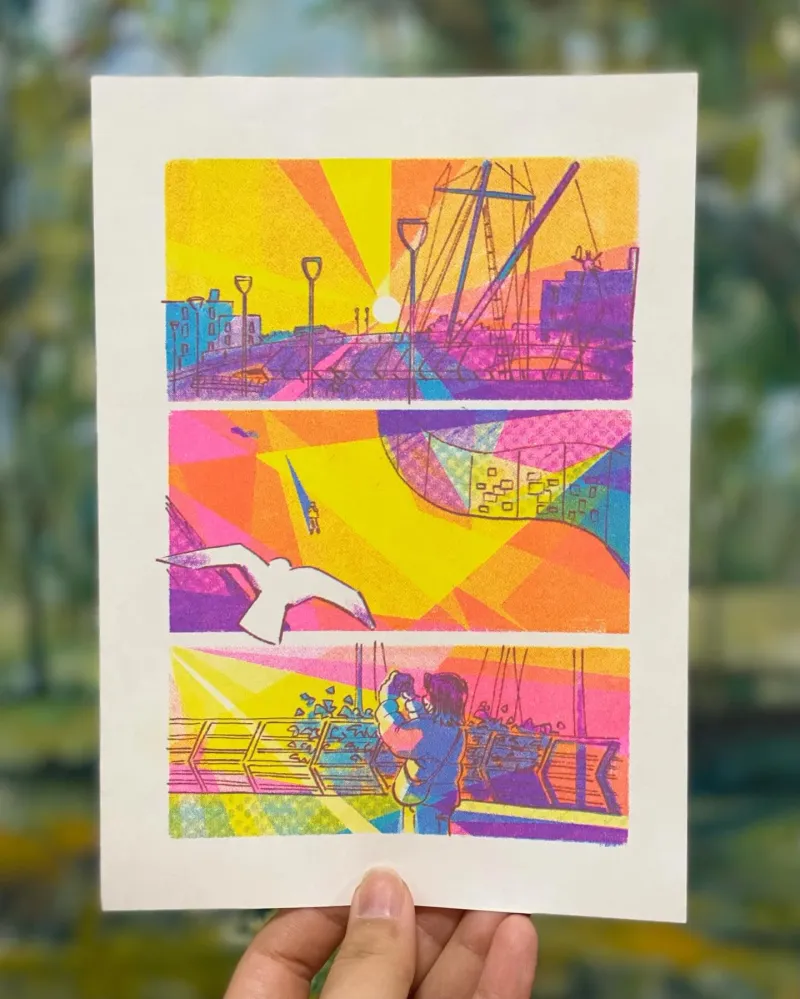
Photo: risograph poetry pamphlets chapbooks on table independent bookshop UK, via i.pinimg.com
There is a particular sound that tells you literature is happening: the thunk of a long-arm stapler in a Leeds basement, a Bristol community hall, or the upstairs room of a pub where the carpet smells of crisps and possibility. It is the sound of the A5 pamphlet being born. Not a ‘small book’ in the apologetic sense. Not a calling card for the novel you have not finished. A concentrated form with its own rules, its own economy and its own delightful habit of taking risks that larger publishers cannot afford.
The format is the manifesto
A5 is not miniature. It is precise. Twenty-four pages give or take a centre spread, and suddenly every decision matters: the order of poems, the white space around a line, whether the title page needs a joke or a warning. There is no room for the padding that turns a good essay into a bad book. There is no room for the blurb that says ‘hilarious and profound’ when it means ‘the author went to school with someone who once met a commissioning editor’. The pamphlet forces a writer to choose. And choice, as any experimental writer will tell you, is where the mischief starts.
This is why the A5 pamphlet is Britain’s best-kept secret weapon. It is where the hybrid essay about council estates and sea shanties gets published. It is where the poet who refuses to end-stop anything finds forty readers who are glad about it. It is where the risograph zine sold at a gig for £4 can sit on the same shelf, spiritually if not commercially, as a Poetry Business pamphlet with a proper ISBN. The format does not care about your CV. It cares about whether the work holds together when you turn the page.
Why risk hides in the staple
The economics are simple and brutal. A pamphlet can break even at 150 copies. A novel cannot. That means a tiny press can publish a fourteen-page poem about a bus shelter, or a sequence of prose poems about a grandmother’s kitchen, or a polemic about hedge funds disguised as a wildlife guide, and nobody has to pretend it is a trilogy. The editor can take the formal risk because the fallout is measured in boxes under a bed, not a shareholder revolt. In 2026, with paper costs behaving like a bad metaphor and postage doing whatever postage does, the pamphlet remains stubbornly viable. It is not immune to the economy. It is just small enough to dodge.
There is also the matter of the object. A pamphlet is not a download. It is a thing you can put in a pocket, spill tea on, lend to a friend and then argue about. The risograph zine with its imperfect registration and its smell of ink is an artefact of a particular night in a particular venue. The poetry pamphlet with its careful colophon is an artefact of a particular editor’s taste. In an age of algorithmic sameness, that matters. Literary archaeology is not only about digging up the past. Sometimes it is about noticing what is being buried right now under the ‘New Releases’ table.
Field notes from the pamphlet underground
You do not need a secret handshake to find this stuff, but you do need to leave the house. Start with gig merch tables. Not the arena tour, the 80-capacity room above a chip shop where the support act is selling a five-track EP and a photocopied booklet of poems about the bus home. Go to zine fairs in Manchester, Glasgow, London and Bristol. Go to poetry festivals and look for the table with the hand-written sign and the person who looks mildly surprised anyone has stopped. Go to independent bookshops and ask what local pamphlets they have. If they look at you blankly, ask again. Bookshops love a persistent weirdo.
Buy direct from presses when you can. The Poetry Business, Nine Arches, Penned in the Margins, Burning Eye, Bad Betty, Fly on the Wall, Guillemot, HappenStance: these are not corporate monoliths, they are people who have decided that literature is worth a stapler and a spreadsheet. Buy the pamphlet, pay the postage, and resist the urge to add it to a giant online cart that treats books like lightbulbs. The pamphlet economy is a small ecosystem. Your £8 is not a donation. It is a vote.
A 2026 guide to submitting without getting fleeced
So you want to send your work out. Good. Here is the practical bit, delivered with the tenderness of a form rejection.
Read the press before you submit. Order a pamphlet. Two, if you can. If you cannot bear to read the kind of work a press publishes, do not ask them to publish yours. This is not gatekeeping; it is basic manners with a postage stamp.
Check reading windows and guidelines. Many small presses open for submissions in specific months and close when they are full. Some accept proposals all year. Some want a sample, some want the whole manuscript, some want a covering letter that does not begin ‘Dear Sir/Madam, I am the next Larkin’. Follow the instructions. They are usually short.
Be wary of fees, but do not automatically reject them. A £5 reading fee for a contest with a real judge and a real prize is one thing. A £45 ‘submission fee’ that guarantees nothing except a warm feeling and a mandatory anthology purchase is another. Ask where the money goes. If the answer is a paragraph of vague uplift language, keep your wallet shut.
Read the rights clause. You should not be signing away copyright. You should not be granting perpetual all-media rights to a press that cannot afford to exploit them. Look for a reversion clause. If the contract reads like a mobile phone agreement written by a pessimist, walk away.
Ask about payment and contributor copies. Most pamphlet publishers pay in copies and a small royalty, if that. That is often fair for the scale. What is not fair is being asked to pay for ‘editorial support’ that is really just publication with a price tag. Vanity presses have learned to use the language of indie publishing. Do not be their next case study.
Keep records and submit widely. Simultaneous submissions are usually fine unless the guidelines say otherwise. Keep a spreadsheet. Note who has your manuscript and when they said they would reply. If they miss their own window by six months, send a polite nudge and then move on. The pamphlet world is small, but it is not a hostage situation.
The archaeology bit
Pamphlets are not ephemeral just because they are small. They are the strata of a literary culture that does not wait for permission. Future literary archaeologists will sift through the boxes of 2026 and find the risograph zines, the stapled elegies, the poems about rent and rivers and terrible landlords. They will notice what the big publishers missed. And they will probably find your copy, with the tea stain on page nine, and think: someone took a risk here. Someone chose A5. Someone stapled the future and charged £7 for it. That is not small. That is the whole point.