Platform 3 Is a Poem and It’s Delayed: A Field Guide to Commuter Found Poetry
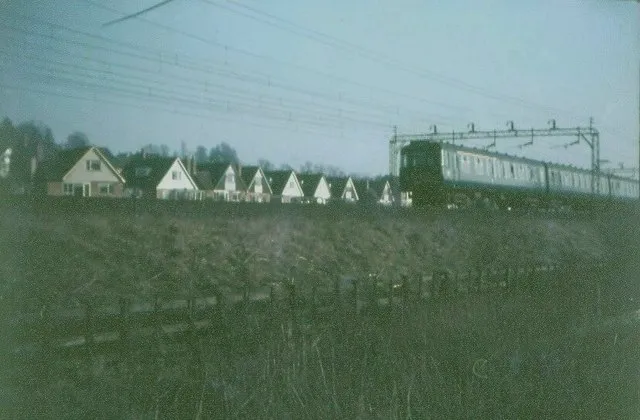
Photo: John Baker, CC BY-SA 2.0, via Wikimedia Commons
The 7:42 to Leeds does not look like a literary salon. It looks like a mobile queue for disappointment, held together by lukewarm coffee and the collective delusion that this time the doors will close on schedule. And yet, somewhere between the tannoy apology and the person arguing into their phone about a spreadsheet, Britain’s most underrated experimental writing workshop is getting underway.
Found poetry is literary archaeology with a season ticket. You are not inventing language; you are excavating it from the rubble of the everyday and arranging the fragments until they say something the original speaker never intended. The commute is perfect for this because it is loud, repetitive, bureaucratic and full of people pretending not to listen. In 2026, with half the country still negotiating the terms of its return to the office, the train remains a theatre of accidental surrealism.
The tannoy is your co-author
Train announcements are already poems. They have repetition, refrain, ominous pauses and a speaker who sounds like they have been hollowed out by a spreadsheet. All they lack is line breaks. Listen for the moments when bureaucracy slips into something stranger:
The train now standing at platform 3
is not the train you require.
We are sorry
for any inconvenience
caused by reality.
That is not a joke about trains. Well, it is, but it is also a found poem assembled from the standard parts of a delay announcement. The trick is to stop hearing announcements as information and start hearing them as material. Write down the odd bits: “due to an earlier incident”, “this is a customer service announcement”, “please ensure you have all your belongings with you”, “the next train is delayed by approximately forever”. Keep the phrases that make you feel slightly unwell. Those are the good ones.
Eavesdropping, but make it ethical
Here is the necessary bit where we pretend to be responsible adults. Found poetry does not require you to be a creep. You are harvesting language, not people. Do not record identifiable conversations. Do not photograph strangers’ faces. Do not hover near a couple breaking up just because the line “I’m not being dramatic, I’m being accurate” is objectively a great opening stanza. Take the phrase, change the details, anonymise the speaker, and move on. If someone notices you writing, smile vaguely and say you are doing a crossword. This is technically true if the crossword is your soul.
The best overheard fragments are the ones that arrive half-finished, like messages from a parallel universe where everyone is a character in a play written by a committee. “If he brings the dog, I’m not doing Christmas.” “It’s not the money, it’s the principle, and also the money.” “You can’t put a hot water bottle in a car boot and call it a picnic.” Collect these without comment. Do not try to make them make sense. Sense is for later.
Signage: the accidental concrete poetry of Britain
Station signage is where found poetry gets its architecture. “Way out”, “No entry”, “Mind the gap”, “Please stand behind the yellow line” — these are already commands, fragments, refrains. Put them next to each other and they start to argue. A good station poem might read:
Way out
except for bicycles
and hope
Please stand behind
the line
of what is reasonable.
You can do this with any public text: supermarket receipts, council leaflets, the back of a train ticket, the instructions on a hand dryer. The trick is to treat the text as a quarry rather than a message. Chip away the boring bits. Keep the verbs. Keep the threats. Keep anything that sounds like it was written by a machine that has recently read Kafka and is trying to be helpful.
Shaping the loot into something poem-shaped
Once you have a notebook full of fragments, do not simply paste them together and call it experimental. That is how you end up with a shopping list and a reputation. Shape the material. Cut it up. Rearrange it. Use erasure: take a page of commuter information and black out everything except the words that feel charged. Use constraint: a poem made only from announcements, or only from things heard while standing up. Use repetition until the phrase “we are sorry” stops meaning sorry and starts meaning something closer to a national condition.
A useful exercise is the ten-minute platform edit. Collect ten fragments. Arrange them into a poem with no more than twelve lines. Remove every word that is doing administrative work. If the poem still sounds like a train announcement, good. If it sounds like a train announcement having a nervous breakdown, better. If it sounds like a train announcement having a nervous breakdown in a Wetherspoons, you have probably won the Forward Prize.
Why the 7:42 to Leeds is a surrealist salon
The 7:42 to Leeds is not special because it is literary. It is special because it is relentlessly, gloriously ordinary, and ordinary language is the rawest material we have. The commute offers what the blank page often refuses to: noise, interruption, other people, bad coffee, fluorescent light, the low-level panic of being late. It gives you the world in its natural state, before the editing brain has put on its sensible shoes.
So next time the train is delayed, do not despair. Despair is not a genre. Get out your notebook. Write down the apology, the signage, the half-heard argument, the announcement that sounds like a villanelle written by a tired bureaucrat. You are not wasting time. You are doing literary archaeology in a fluorescent-lit trench, and the artefacts are still warm.
Just do not make eye contact with the person opposite. They are probably writing a poem about you.