We Are Experiencing a Higher Than Usual Volume of Plot: Notes from the Hold Button
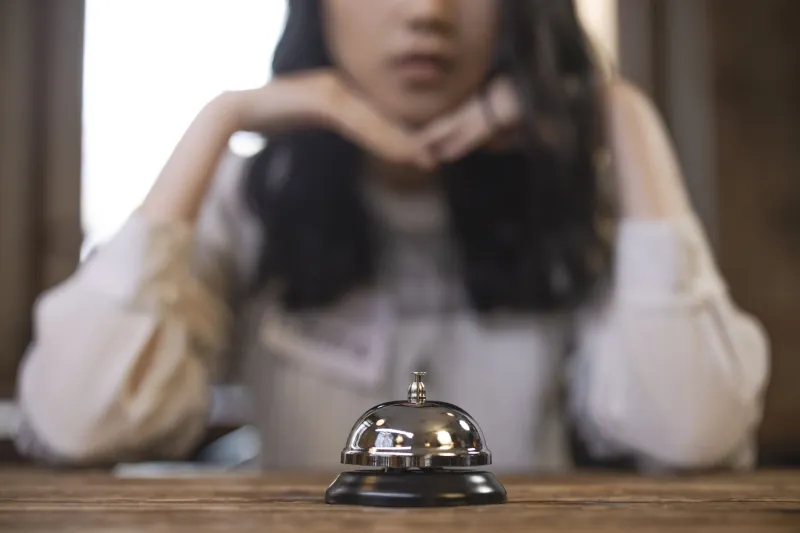
There is a particular silence that happens at 9:02 on a Monday morning, when forty thousand people across these islands dial the same number at the same moment and are greeted, warmly, by a woman who is not there. Your call is important to us. She says it the way a landlord says he'll look into the damp.
This is our most underrated literary form. Not the novel, not the sonnet, not the six-line bio on a pamphlet's back flap — the hold queue. It has character, structure, rising action, an unreliable narrator and, more often than not, an ending so abrupt it would make Samuel Beckett wince and reach for the gin.
We should be stealing from it wholesale.
The apology that means the opposite of itself
Consider the phrase we are experiencing a higher than usual volume of calls. It is the most elegant piece of sustained dramatic irony in British public life. It means: we did not staff this. It means: this is usual, this is every day, this is the volume, forever. It is delivered in a voice of such placid reassurance that thousands of people hang up feeling vaguely comforted and unable to say why.
That voice is your narrator.
Not your protagonist — your narrator. The disembodied one, the one with the accent nobody can place, the one who has been recorded once and now exists outside time. It reassures you constantly and tells you nothing true. Every experimental writer who has ever fretted about the trustworthy/untrustworthy narrator question could save themselves a fortnight by simply listening to a recorded message from a water company.
Write a story where the narrator's job is to soothe the reader while the situation deteriorates. Never let them lie outright. Let them say your call is important while the queue position climbs. That's the trick of it. The reassurance is not false. It's just useless.
The clock that counts upward
Writers are always being told to raise the stakes. The hold queue does something subtler and much more interesting: it raises the number.
You are number fourteen in the queue.
Fourteen is not a threat. Fourteen is barely a number. But it is a number with a direction, and a reader will follow a direction with the dogged loyalty of a labrador. Twelve. Eleven. Nine — and then, exquisitely, inexplicably, fifteen, because a priority customer has been placed ahead of you and the universe has briefly reversed its own arrow.
That's a plot. Right there. No explosions, no betrayals, no third-act revelation in a car park. Just a number moving in a direction and occasionally, brutally, not.
Try this: write a thousand words in which the only thing that changes is a countdown. No dialogue. No scene breaks. No interiority beyond what the number does to a person's breathing. If the reader finishes it and checks their own phone, you've won.
Hold music is a paragraph
Nobody talks enough about the loop.
The hold music is four bars of something synthesiser-adjacent, appearing at first as pleasant, then as wallpaper, then as a personal insult, then — around minute thirty-four — as a kind of profound and necessary truth. It is the same four bars every time. It does not develop. It does not resolve. It simply is.
This is what prose rhythm actually does, when it's working. Repetition with a slight change. Repetition with a slight change. The reader stops noticing the sentence and starts noticing the shape of the sentence, and by the time they've stopped noticing entirely, they are yours.
Most writers flinch at repetition. The hold queue does not flinch. The hold queue interrupts its own loop at random intervals to say did you know you can manage your account online?, and that interruption — that sudden, cheerful, irrelevant return of the voice — is the paragraph break. It resets the ear. It makes the loop bearable for another eight minutes.
Steal that. Long passage, then a short flat sentence that changes nothing and everything. Long passage, then the small interruption. Then loop again.
The cut-off is the ending you deserve
And then, at fifty-eight minutes, with the finish line visible and your shoulders already relaxing into the shape of a resolved person, the line goes dead.
Not with a message. Not with an apology. With nothing.
British fiction has spent two centuries apologising for its endings. We explain them, we underline them, we add an epilogue in case the reader has recently suffered a head injury. The hold queue knows better. The anticlimax is not a failure of nerve — it is the most honest final beat available to a writer, because it is the one that leaves the reader doing the work.
Don't resolve it. Don't even cut it off dramatically. Cut it off administratively. One line. The line went dead. Then stop typing.
A workshop you can conduct while on hold
- Draft the hold. One hour, one protagonist, one queue. No secondary characters. No setting beyond a kitchen chair and a window. The only permitted event is a change in position and the return of the recorded voice.
- Give the voice a personality by accident. Never describe it. Let it describe itself through the things it chooses to reassure you about.
- Insert one callback. Somewhere past the halfway point, offer the reader an escape — press one to be called back — and have your protagonist decline it, for reasons they cannot articulate. That's your character's whole psychology, revealed without a single adjective.
- End at the cut-off. Not after. At.
In defence of making people wait
There's a politics buried in all this, obviously. A queue is a claim about who matters and in what order, and the recorded voice is the sound of an institution asking you to be patient about your own irrelevance. The form is not neutral. It was built to keep you there and it was tuned, meticulously, to stop you leaving.
Which is, if we're honest, exactly what a good story does.
So next time you're on hold — and you will be, probably before lunch — don't do the crossword. Take notes. Listen to how the voice apologises, how the number creeps, how the music forgets itself and begins again. Somewhere in that flat, cheery, twenty-eight-minute purgatory is a short story that will land harder than anything you'd have written if they'd answered on the first ring.
The line is important to us. Please continue to hold.