Marrows, Mutiny and the Mid-Plot Shed: Growing Experimental Fiction on a Council Allotment
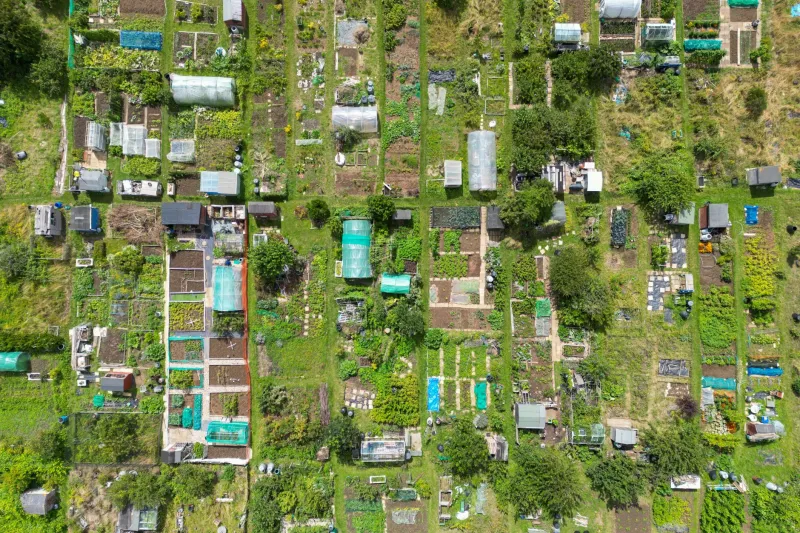
There is a certain kind of writer who treats the novel like a supermarket vegetable: uniform, predictable, grown in someone else's polytunnel and shipped in on a refrigerated lorry. The British allotment offers a different model. Not the fantasy of rural self-sufficiency — the reality of a council-owned strip of mud with a waiting list, a water butt that leaks, and a neighbour who insists your compost is 'too wet.' The allotment is a plot machine, but not because it produces tidy stories. It produces sideways ones.
The Waiting List Is a Prologue
Every allotment begins with a wait. You put your name down in 2026 and are told, cheerfully, that a plot might come free in 2029. This is not bureaucracy. It is narrative delay. The waiting list is a prologue you cannot skip, a stretch of anticipation in which you imagine the plot, argue with yourself about raised beds, and develop strong opinions about manure. Writers could learn a lot from this. Most novels rush the prologue. The allotment teaches you to let anticipation rot down into something fertile.
Exercise: Write the five-year wait as a three-page prologue in which nothing happens except the arrival of a letter. Use only objects: a spade handle, a seed catalogue, a mug of tea gone cold. No interior monologue. Let the waiting do the work.
Crop Rotation Is a Subplot
On an allotment you do not plant the same crop in the same bed year after year. You rotate. Potatoes follow brassicas, legumes follow roots, and the whole thing is a dance of avoidance and replenishment. This is exactly how subplots should behave. Put the same emotional beat in the same chapter twice and you get a soil-borne disease. Rotate your themes. Move the love affair from the kitchen to the greenhouse. Let the family argument migrate from the shed to the compost heap. The story grows sideways, not straight up.
Exercise: Draw your novel as a set of raised beds. Assign each major subplot to a bed. Then rotate them: what happens if the money subplot is planted where the grief subplot was? Write one scene from that rotated position and see what volunteers itself.
Seed Packets Are Unreliable Narrators
The back of a seed packet is a masterclass in optimistic deception. 'Vigorous.' 'Heavy cropper.' 'Resistant to bolting.' Then the slugs arrive, the summer is a washout, and your 'vigorous' courgette produces one melancholy fruit the size of a thumb. The seed packet is an unreliable narrator — and a very good one. It tells you what you want to hear in a voice of cheerful authority. Steal that voice. Give it to a character who is absolutely certain about everything and catastrophically wrong.
Exercise: Write the seed packet blurb for your protagonist. Three lines. What are they 'resistant' to? What do they promise to 'crop heavily'? Then write the scene in which the slugs prove them wrong.
Shed Politics Is Dialogue
The allotment shed is a theatre of small disputes. Hose sharing. Manure deliveries. The correct angle at which to stack the communal pallets. The AGM is a Beckett play with tea. This is dialogue gold because nobody says what they mean. A complaint about bindweed is rarely about bindweed. A question about the water butt is an accusation about last July.
Exercise: Write a two-hander in which two plot-holders discuss a seed order. They must never mention the real argument, which is about a borrowed rotavator. Let the catalogue do the talking. No stage directions. No resolution.
The Compost Heap Is Your Revision Strategy
Compost is not waste. It is revision. You pile up the failed scenes, the dead metaphors, the chapters that went woody, and you let them break down. Then you dig the result back into the bed. The compost heap teaches patience, but it also teaches that nothing is wasted — not even the bit where your protagonist explains their own backstory for four pages.
Exercise: Take a failed scene. Do not edit it. Instead, write a one-page 'compost note' describing what it was trying to do. Put it away for a week. Then rewrite the scene from the compost note, not from the original. See what has broken down and what has survived.
Grow Sideways, Not Straight
The supermarket novel wants uniform rows and predictable harvests. The allotment novel wants awkward patches, volunteer seedlings, and a shed that leans. It wants you to accept failure as part of the growing season. It wants you to share a hose with someone you disagree with. It wants you to write the kind of story that grows sideways, in the gaps between the beans, where the light is strange and the slugs are honest.
So put your name down for a plot. Or don't — the waiting list is long. But steal the structure anyway. Rotate your subplots. Trust the seed packet to lie. Let the shed politics do the dialogue. And when the first draft fails, do not throw it away. Compost it. Something will grow.