The Tombola Is a Sonnet Machine: Chance, Cake and the Church-Hall Draft
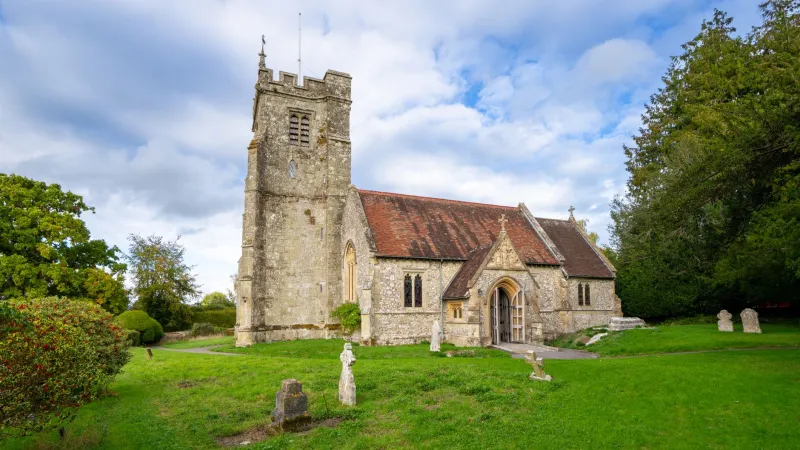
The village fête is not a quaint obstacle to literature. It is a plot machine with a tea urn. Walk into any church hall in Britain on a Saturday afternoon and you will find trestle tables, laminated signs, a vicar pretending to enjoy the raffle, and a tombola drum that sounds like a small, polite revolution. This is not nostalgia. This is structure.
The church hall is a constraint engine
Experimental writers love a constraint. We will happily lock ourselves in a room with a lipogram, a sestina, a word count and a rule about not using the letter e. Then we will ignore the most available constraint engine in the country: the parish fundraiser.
The fête is already full of rules. The cake stall has a pricing hierarchy. The white-elephant stall has a moral hierarchy. The raffle has a ticket stub, a draw, a list of prizes and an atmosphere of suppressed covetousness. The tombola has a drum, a fixed number of tickets and a growing pile of unclaimed prizes. Everything is decided by chance, but the chance is administered by a woman called Brenda with a clipboard. That is basically the Oulipo with better catering.
Georges Perec would have loved the raffle book. He would have admired the way a strip of five tickets costs £1 and yet somehow generates twenty minutes of suspense, three disappointments and one minor family argument. The fête does not need a manifesto. It has a rota.
Every ticket is a stanza
A tombola is a sonnet. It has a fixed shape, a turn, and a closing couplet that is usually a tin of custard. You buy your strip. You wait. The caller plunges a hand into the drum and reads out a number. The number is either yours or not yours. This is narrative tension at its most brutally efficient. No backstory required. No interior monologue. Just a five-digit number and the sudden knowledge that you have won a scented candle shaped like a pineapple.
The prizes are the best part. A tombola prize is never neutral. It is a small object with a biography. A bottle of Babycham from 1998. A jigsaw with three missing corners. A book about pruning roses. A novelty mug that says 'World's Best Grandad' and has clearly been regifted at least twice. These objects are not random. They are character prompts in disguise.
When a child wins a bottle of sherry and a pensioner wins a bubble wand, you have a plot. When the vicar wins the raffle and has to pretend he is delighted about a voucher for a haircut, you have a satire. When nobody wins the top prize and the vicar's wife says, 'We'll roll it over to Christmas,' you have a sequel.
Cake labels are found poetry
The cake stall is a literary archive. The labels are found text. 'Victoria sponge – contains nuts – Mary's – 50p.' 'Lemon drizzle – please don't touch – gluten-free option on separate table.' 'Coffee and walnut – £3 – no refunds.' This is not just information. It is voice. It is a whole social world compressed into a strip of masking tape and a biro.
The wonky signage is even better. 'CAKE STALL / please pay at the other table / no dogs except guide dogs and Brian.' Who is Brian? Why is Brian exempt? What has Brian done to deserve this? You do not need to invent a narrative. You need only copy the sign and then ask the questions.
There is also 'Guess the Weight of the Cake,' which is an unreliable narrator in cake form. Someone writes down a number. Someone else writes down a different number. The cake is weighed. A child wins. Everyone claps. The cake is then cut and sold for 50p a slice. This is a complete short story about certainty, measurement and disappointment, and it takes four minutes.
Three fête exercises for a collective workshop
1. The Tombola Draft. Each writer brings twelve lines of a poem or twelve short sentences of prose, printed on separate tombola tickets. Put them all in a drum. Draw them out one by one. The resulting order is the draft. Read it aloud. Do not fix it immediately. Notice where the chance arrangement has created a turn you would never have written yourself.
2. The Cake-Stall Character Generator. Write six cake labels. Be specific and a little cruel. 'Lemon drizzle, 74, has opinions about cul-de-sacs.' 'Chocolate brownie, 31, is not over their ex.' 'Vegan flapjack, 19, has a podcast.' Draw one label and write a monologue in that voice. Keep it under 300 words. Read it out while someone else eats a biscuit.
3. The Raffle-Prize Plot. List eight raffle prizes on separate slips of paper. Include at least one genuinely good prize and one object that should have been thrown away in 2011. Each scene of your story must include one prize. The final scene must resolve with the least desirable prize. This is not a gimmick. It is a machine for forcing endings.
Against the algorithm
In an age of personalised everything, the tombola is gloriously impersonal. It does not know your reading history. It has not been optimised for engagement. It cannot recommend a prize based on your previous prizes. It simply gives you a ticket and takes its chances. That is a useful corrective for writers who have spent too long curating their own taste.
The fête is also a reminder that literature does not need to be expensive. A church hall, a urn of tea and a drum of tickets will do. The point is not to be quaint. The point is to let something outside your own head make a decision for you. The tombola will not make you a better writer. It will make you a less predictable one. And in a country where the parish fundraiser is still held together by Sellotape, goodwill and a rota, that is no small thing.
Next time you see a hand-written sign sellotaped to a church door, do not walk past. Copy it down. Buy a strip. See what you win. Then write the story the prize deserves.